No More Mystery Cans: How to Run a Thanksgiving Food Drive With One Free Sign Up Sheet
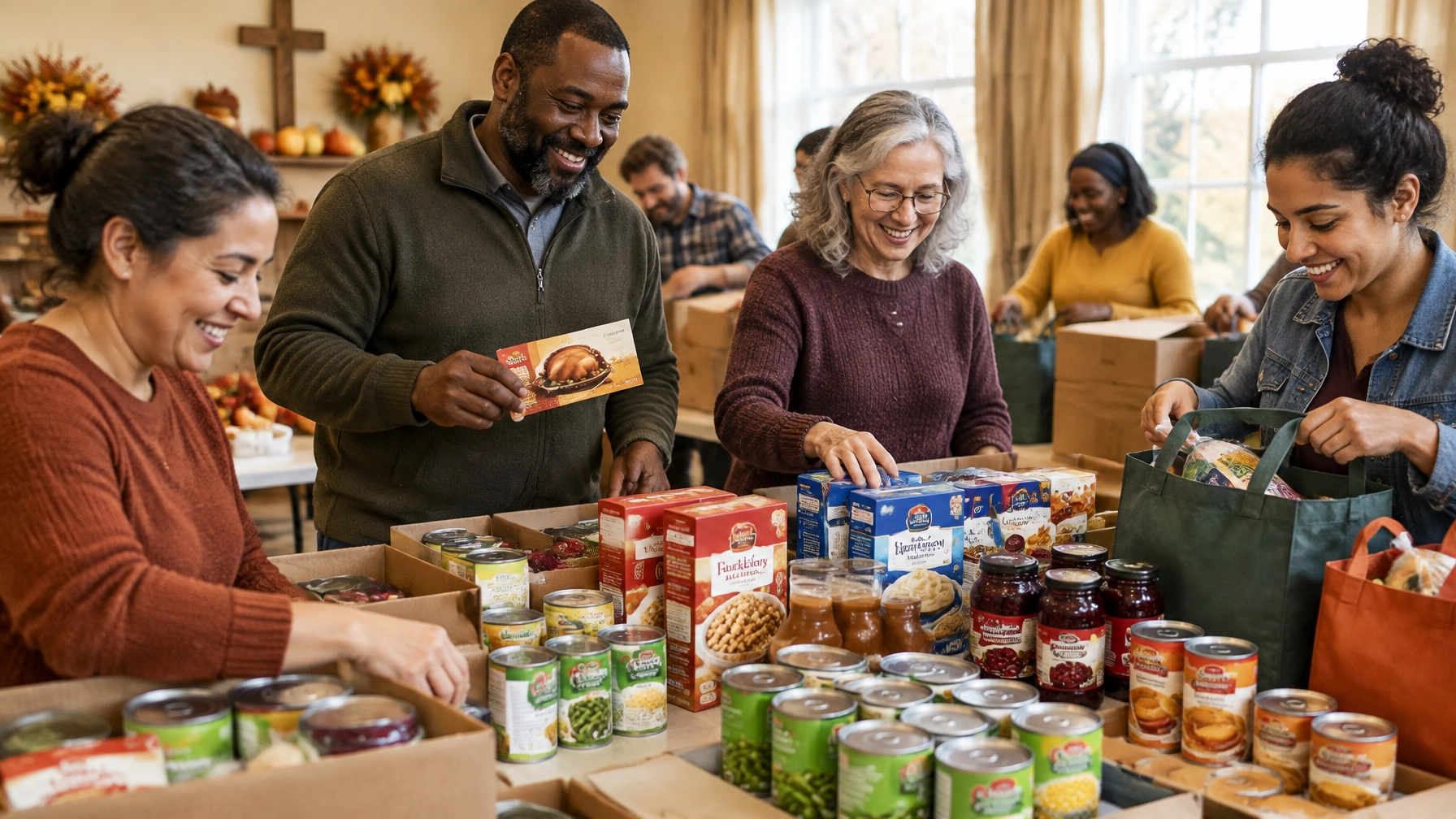
A Thanksgiving food drive should help neighbors. It should not create a mountain of mystery cans in the corner.
You know the scene. Fourteen cans of pumpkin pie filling. Zero turkeys. A few dented cans. One expired box of stuffing. Nobody signed up to bring boxes, bags, or grocery gift cards.
And the paper sign-up sheet? It is hanging in a hallway where no one can see what is still needed.
A clear online sign up sheet fixes the problem. It shows people exactly what to bring, how many are needed, and when to drop everything off. It also gives volunteers a shared plan.
Here is how to run a Thanksgiving food drive without losing your sanity, or accidentally collecting enough stuffing to feed a very enthusiastic army.
Start by choosing your collection model
Your collection model shapes your sign-up sheet. Choose one before you start asking for donations.
Option 1: One-day drive-through drop-off
This works well for a church, school, workplace, or neighborhood group with a central location.
Your free sign up sheet should include:
- Specific food and supply needs
- Drop-off windows
- Donation limits
- Greeter shifts
- Sorting and packing shifts
- Delivery roles
This model is fast and easy to promote. It also requires enough volunteers for one busy day.
Option 2: Multi-week collection
A multi-week drive gives people more time to shop. It works well for a school, church, scout troop, or office with a secure collection area.
Your sheet should include:
- The start and end dates
- Weekly collection goals
- Collection site volunteers
- Item categories
- A final sorting and packing date
- Delivery assignments
Post or share a progress update each week. If you already have enough stuffing, donors can choose vegetables or grocery gift cards instead.
Option 3: Online donation drive with an item wish list
Some donors may not be able to shop, transport a turkey, or attend a drop-off. An online donation drive can offer a turkey or $10 grocery gift card option.
Use your sheet to list:
- Grocery gift card needs
- Online donation instructions
- A deadline
- Volunteers who will purchase missing items
- People responsible for reporting totals
Whatever model you choose, ask the receiving food pantry what it can accept. Confirm its rules for fresh, frozen, refrigerated, and shelf-stable food before you publish the list. Resources such as food drive planning guidance from Food Bank Online can help you think through the basics.
Name exact items. Skip “non-perishables.”
“Please bring non-perishables” sounds simple. It is not specific enough.
People need direction. Otherwise, everyone buys the easiest item on the shelf. That is how you end up with 40 boxes of stuffing and no vegetables.
Build your volunteer sign up sheet around exact items:
Main Thanksgiving items
- 20 turkeys or $10 grocery gift cards
- 40 cans of vegetables, such as green beans, corn, peas, or carrots
- 25 boxes of stuffing
- 25 boxes or packets of mashed potato mix
- 25 cans, jars, or packets of gravy
- 25 cans of cranberry sauce
- 20 pie crusts and 20 cans of pie filling
- 20 packages of dinner rolls, if your collection model allows fresh food
- 15 containers of shelf-stable milk
- 10 packages of coffee or tea
Useful non-food supplies
- Reusable grocery bags
- Cardboard boxes
- Paper grocery bags
- $10 grocery gift cards
- Labels or packing tape, if volunteers need them
Specific requests make shopping easier. They also make your final boxes more useful.
A donor can glance at the list and say, “I can bring two cans of vegetables.” That is much more helpful than wondering what “non-perishable” means.

Set limits for every item
Quantity limits are the secret to a balanced food drive.
Add a number beside each item. When the goal is reached, close that spot or update it.
For example:
- 20 turkeys or gift cards
- 40 cans of vegetables
- 25 boxes of stuffing
- 25 mashed potato mixes
- 25 gravy items
- 25 cranberry sauces
- 20 pie crusts
- 20 pie fillings
- 15 shelf-stable milks
- 10 coffee or tea packages
Without limits, donors tend to choose the same popular items. With limits, the group fills the gaps.
This is not about telling people they cannot help. It is about making every donation count. If all 40 vegetable spots fill up, add a note: “Vegetables are covered. Please choose gravy, cranberry sauce, gift cards, or reusable bags.”
That one update may save you from storing a lifetime supply of green beans.
Add notes for real household needs
A Thanksgiving box should not assume every household eats the same way.
Use notes on your online sign up sheet to identify useful options. Ask the pantry which needs are most important in your community.
Consider including:
- Gluten-free stuffing or baking mixes
- Low-sodium vegetables, gravy, and soups
- No glass jars, since glass can break during sorting and delivery
- Halal-friendly options
- Nut-free items
- Single-serve packages for individuals
- Family-size packages for larger households
- Infant and child-friendly foods
- Shelf-stable milk
- Caffeine-free tea, if requested
Keep the wording simple. For example:
Please choose unopened, in-date items. Avoid glass containers, badly dented cans, damaged packaging, and products with missing labels.
Do not guess about dietary needs. Confirm them with the pantry or community partner first.
Use a sign up sheet with times
A sign up sheet with times helps prevent a one-hour traffic jam at the church door.
For a one-day drive, try a structure like this:
Drop-off windows
- Saturday, 9:00–10:30 a.m.
- Saturday, 1:00–3:00 p.m.
Break each window into 30-minute slots. Set a cap on the number of bags, boxes, or donors per slot.
For example:
- 9:00–9:30 a.m.: Up to 10 bags
- 9:30–10:00 a.m.: Up to 10 bags
- 10:00–10:30 a.m.: Up to 10 bags
- 1:00–1:30 p.m.: Up to 10 bags
- 1:30–2:00 p.m.: Up to 10 bags
- 2:00–2:30 p.m.: Up to 10 bags
- 2:30–3:00 p.m.: Up to 10 bags
You can adjust the numbers for your space and team.
Add separate shifts for:
- Day-of greeter: Welcomes donors and checks off donations
- Sorter and quality checker: Reviews dates, labels, and packaging
- Box packers: Build balanced boxes
- Delivery drivers: Transport donations
- Pantry liaison: Confirms delivery details
- Thank-you volunteer: Sends messages after the drive
Time slots turn a vague volunteer request into a clear commitment. “Can someone help Saturday?” is easy to ignore. “Greeter, 9:00–10:30 a.m.” is much easier to answer.

Give every volunteer a real job
A food drive runs better when each person knows what success looks like.
Collection site greeter
Welcomes donors, checks off their selected item, and directs donations to the correct table or bin.
Sorter and quality checker
Checks expiration dates and packaging. Removes expired, opened, leaking, badly dented, or damaged items. Removes glass if your partner pantry does not accept it.
Box packers
Follow a simple packing guide. Each box should contain a balanced mix instead of five cans of one item.
Drivers
Confirm vehicle space, pickup time, parking instructions, and delivery contact before loading.
Pantry liaison
Stays in touch with the pantry. Confirms its needs, delivery instructions, and any last-minute changes.
Thank-you volunteer
Sends a short thank-you note or message. Reports the final totals so donors can see the impact of their help.
Host checklist: plan by the week
Six weeks out
- Choose the pantry or community partner.
- Confirm accepted items and quality rules.
- Choose your collection model.
- Set a goal for boxes, households, or total items.
- Reserve the collection and packing space.
Three weeks out
- Create the free online sign up sheet.
- Add exact items and quantity limits.
- Add drop-off windows and volunteer shifts.
- Share the drive with your church, school, workplace, troop, or neighborhood.
One week out
- Review the sign-up totals.
- Fill gaps in vegetables, gift cards, bags, boxes, or volunteers.
- Remind donors about expiration dates and packaging.
- Confirm delivery details with the pantry.
The day before
- Set up tables, bins, labels, boxes, and tape.
- Print or share the packing instructions.
- Confirm greeters, sorters, packers, drivers, and the pantry liaison.
- Check that the space is clean, dry, and easy to access.
The day of
- Welcome donors.
- Check off donations.
- Sort by category.
- Check dates and packaging.
- Pack balanced boxes.
- Count the final totals.
- Load and deliver donations as planned.
After the drive
- Thank donors and volunteers.
- Report totals back to the group.
- Share how many boxes were packed or how many households were supported.
- Ask the pantry what worked and what should change next year.

Keep the drive dignified
The people receiving food are your neighbors. Treat them that way.
Do not publish recipients’ names. Do not photograph people receiving donations without clear permission. Avoid language that makes anyone feel like a project or a number.
Use phrases such as:
- “Neighbors helping neighbors”
- “Thanksgiving support for local households”
- “Community food drive”
- “Holiday food boxes for local families”
Focus on the shared goal. Everyone deserves a good meal and respectful treatment.
Make coordination easier with TimeToSignUp
You do not need a complicated system for a successful food drive. You need one clear place for item needs, quantity limits, volunteer roles, and drop-off times.
TimeToSignUp helps you create a simple online sign up sheet for your church committee, school PTO, workplace, scout troop, or neighborhood group.
You get:
- Clear item and volunteer sign-ups
- Time slots for drop-offs and shifts
- A straightforward experience for donors
- Absolutely no ads on the site
- No selling of personal information 🔒
You can learn more on the TimeToSignUp features page or visit TimeToSignUp.
For a simple drive, a free sign up sheet may be all you need. If you want a paid account, current pricing is $19 per year for nonprofit and personal accounts and $25 per year for commercial accounts.
No mystery cans. No hallway paper nobody can read. No 14th can of pumpkin pie filling when what you really need is gravy.
Just a clear plan, helpful volunteers, and neighbors helping neighbors.