Thanksgiving Dinner at Church: How to Feed 200 Without Losing Your Mind
A family Thanksgiving plan does not magically stretch from 12 people to 200. At that scale, “I’ll bring a side” can mean 14 pans of stuffing, no green beans, and a kitchen full of people asking where the serving spoons went.
A community dinner can still feel welcoming and run smoothly. The trick is to make the plan specific: count the meals, name the jobs, assign food and shifts, and give one person a clear view of the whole operation.
Do the math before you ask for food
Start with last year’s attendance, then add the people who have RSVP’d this year. If it’s your first dinner, ask a local food pantry or community center for a reasonable headcount estimate. Plan for about 10% more meals than you expect when attendance is uncertain.
The table below uses one raw pound of whole turkey per planned meal as a starting estimate, plus one half-cup serving of each listed side, one roll, and one slice of pie. Adjust for your menu, serving sizes, and whether you are packing takeout meals.
| Expected guests | Meals to plan for | Whole turkey, raw weight | Mashed potatoes | Stuffing | Green beans | Rolls | Pie slices |
|---|---|---|---|---|---|---|---|
| 50 | 55 | About 55 lb | 55 half-cup servings | 55 half-cup servings | 55 half-cup servings | 55 | 55 |
| 100 | 110 | About 110 lb | 110 half-cup servings | 110 half-cup servings | 110 half-cup servings | 110 | 110 |
| 200 | 220 | About 220 lb | 220 half-cup servings | 220 half-cup servings | 220 half-cup servings | 220 | 220 |
For whole birds, that may mean roughly 4–5 turkeys for 50 planned meals, 7–9 for 100, or 14–18 for 200, depending on each bird’s size. These are planning estimates, not a substitute for your cooks’ menu and portion plan. The University of Nebraska–Lincoln’s turkey guide offers more guidance on turkey amounts and cooking.
Make one master food list. Include gravy, butter, cranberry sauce, drinks, foil pans, serving utensils, and to-go containers. A meal needs more than the turkey and the potatoes.
Give every job a name
“Everyone will pitch in” sounds nice. It is not a staffing plan. Divide the work so it does not land on one family, or on the two people who are still washing dishes after everyone else goes home.
Assign leads for:
- Kitchen captain: Owns the menu, oven plan, food check-in, and kitchen flow.
- Turkey and side-dish teams: Prepare, deliver, or cook the assigned items.
- Dessert team: Brings pies, serves them, and manages leftovers.
- Setup team: Arranges tables, chairs, signs, and serving areas.
- Greeters and seating helpers: Welcome guests and help them find seats.
- Drink station: Keeps drinks, cups, and refills organized.
- Serving teams: Plate or serve the meal and keep the lines moving.
- Takeout packers: Prepare meals for homebound neighbors and other people who cannot join in person.
- Cleanup crew: Handles dishes, tables, trash, and putting the space back in order.
A volunteer sign up sheet turns vague “I can help” offers into named people and clear tasks. It also makes the gaps visible while there is still time to fill them.
Ask for exact food, not “a dish”
For a dinner this size, a potluck sign up sheet should list specific items and quantities. “Bring a dish” does not tell you whether you’re getting a large pan of potatoes or one small bowl.
Try requests like:
- 4 whole turkeys, 12–16 lb each
- 3 large foil pans of stuffing
- 4 large foil pans of mashed potatoes
- 3 large foil pans of green beans
- 220 rolls and 10 lb of butter
- 28 pies, or another amount based on your serving plan
- 50 foil pans and 100 takeout containers
Use the kitchen captain’s plan to set final quantities and pan sizes. Specific requests matter because oven space and timing are often the bottlenecks, not the number of recipes people can make.
Decide who is roasting each turkey. The church kitchen may handle them all, or volunteers may roast assigned birds at home. If volunteers are cooking, share clear instructions about bird size, cooking temperature, transport, and delivery time. Do not accept partially cooked poultry to finish later. Follow USDA guidance for safe community meals; turkey should reach 165°F in the appropriate places, and hot food should be held at 140°F or hotter.

Use shifts that fit real lives
Your volunteers may be happy to help. They may also have family plans, work, or a very strong desire not to spend the entire holiday in the kitchen. A sign up sheet with times lets people choose a useful shift without giving up their whole day.
Create clearly named slots for:
- Morning prep: Set up work areas, wash produce, and prepare ingredients.
- Midday cooking: Manage ovens, stovetops, and hot holding.
- Serving: Use two-hour blocks, with enough people for each serving line.
- Takeout packing: Pack, label, and organize meals for delivery or pickup.
- Cleanup: Clear tables, wash dishes, remove trash, and reset the kitchen.
A simple schedule gives volunteers a start time, an end time, and a job. That is much easier to follow than “come by whenever.”
Plan the kitchen and dining room
Before the week of Thanksgiving, map out what equipment and space you actually have. List the ovens, stovetops, refrigerators, warming equipment, outlets, tables, chairs, and thermometers. Then have the kitchen captain make a written oven schedule: what goes in when, where it will be held, and who is responsible for it.
Use separate areas for food check-in, cooking, hot holding, serving, dishwashing, and trash. Keep guests and the serving queue out of the kitchen. Have a runner watch for low pans and bring out replacements. Keep backup food at a safe temperature, and use a food thermometer rather than guessing.
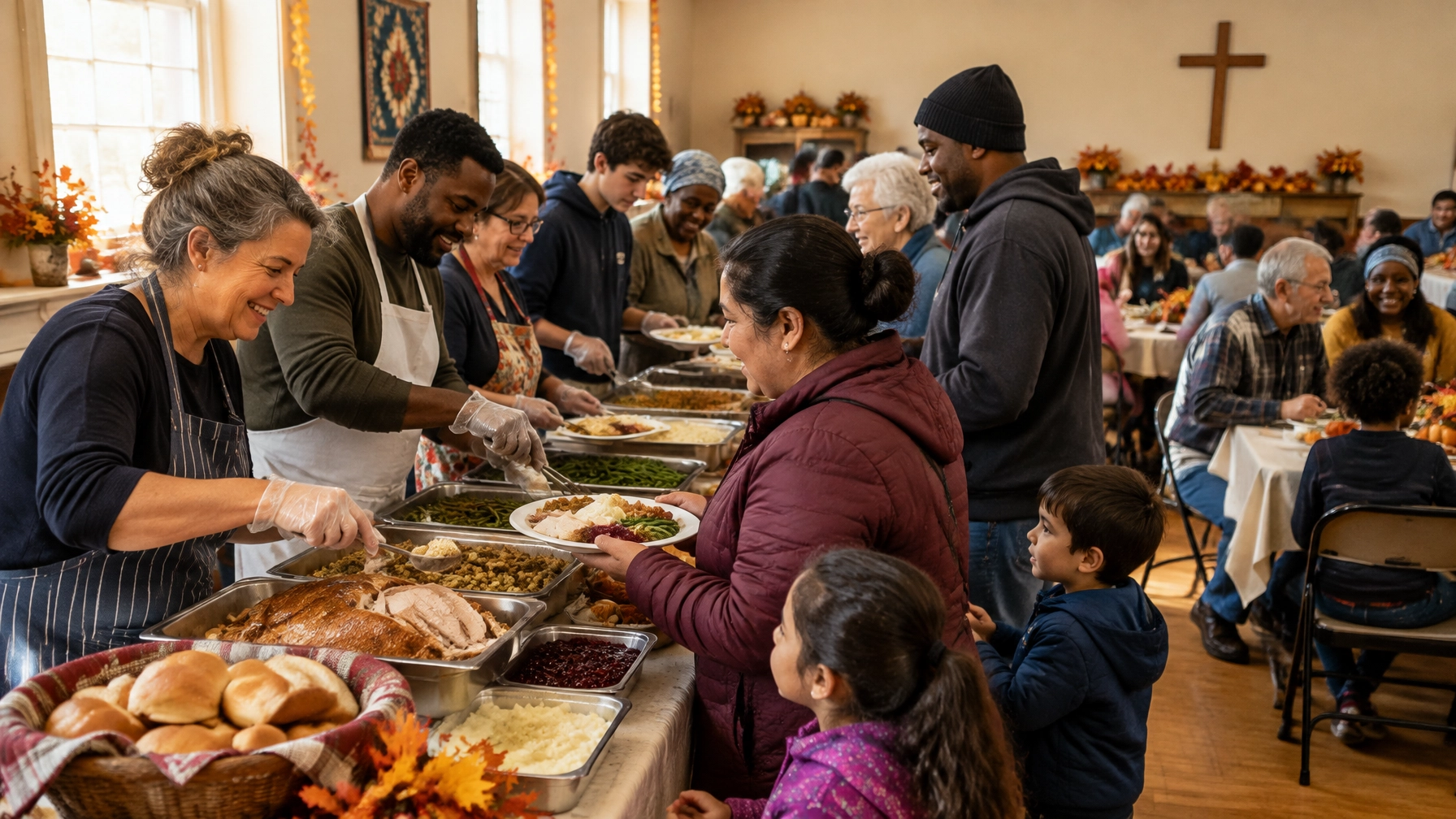
For 200 guests, one serving line can become a long wait. Two buffet lines can move people through more quickly; put drinks and desserts in a separate area so people stopping for refills do not block the meal. Family-style service can feel cozy, but it needs many serving dishes and people at every table to keep them replenished. Plated service gives you more control over portions, but requires more servers. Pick the format your team and space can support.
Count your seats, not just your plates. Leave extra room for walkers and wheelchairs, check that guests can reach the dining room and restrooms, and set aside a kids’ table if that suits your community. A little elbow room is part of hospitality.

Make the invitation truly welcoming
A community dinner is for more than people who already know everyone in the congregation. Invite neighbors who do not have family nearby, students, shift workers, and anyone who might otherwise spend the holiday alone.
Share the invitation through the church, nearby community groups, a local food pantry, and a community center. Ask partners what needs they are seeing and whether they can help spread the word. If you are serving homebound neighbors or first responders on duty, plan their meals separately: count the containers, choose packers and drivers, and confirm the food will be transported safely.
A practical Thanksgiving timeline
Four weeks out: Book the space. Choose a coordinator and kitchen captain. Check equipment, seating capacity, and any local food-service requirements.
Two weeks out: Confirm the menu and estimated headcount. Build an online sign up sheet for food donations and volunteer shifts. Share it with the congregation and community partners.
One week out: Confirm the turkey count, who is roasting each bird, and the oven schedule. Check dietary needs and supplies, including foil pans and takeout containers.
The day before: Set up tables if possible. Receive and count shelf-stable items. Label pans and delivery instructions. Make sure refrigerated food has room.
Thanksgiving morning:
- First: Set up stations and check that the kitchen is ready.
- Next: Receive food, confirm quantities, and start the oven schedule.
- As cooking continues: Check temperatures and move finished food to safe hot holding.
- Before serving: Set out serving tools, drinks, and clear signs. Brief each team on its task.
- After the meal: Pack planned takeout meals, clear the dining area, and begin cleanup.
After the dinner: Thank volunteers and donors. Record how many meals you served, what food was left, and what you would change next year. Your future kitchen captain will be grateful.

Make coordination one less thing to worry about
TimeToSignUp helps you organize volunteer shifts and food donations in one place. You can start with a free online sign up sheet or use a paid account for more features. TimeToSignUp has absolutely no ads and does not sell personal information.
Current pricing is $19 per year for nonprofit and personal accounts and $25 per year for commercial accounts. See TimeToSignUp features or learn about TimeToSignUp.
Feed the neighbors. Share the work. And give the kitchen captain a holiday plan that does not involve discovering 12 extra pans of stuffing at the last minute.