25 Creative Classroom Holiday Party Ideas You’ve Never Thought Of
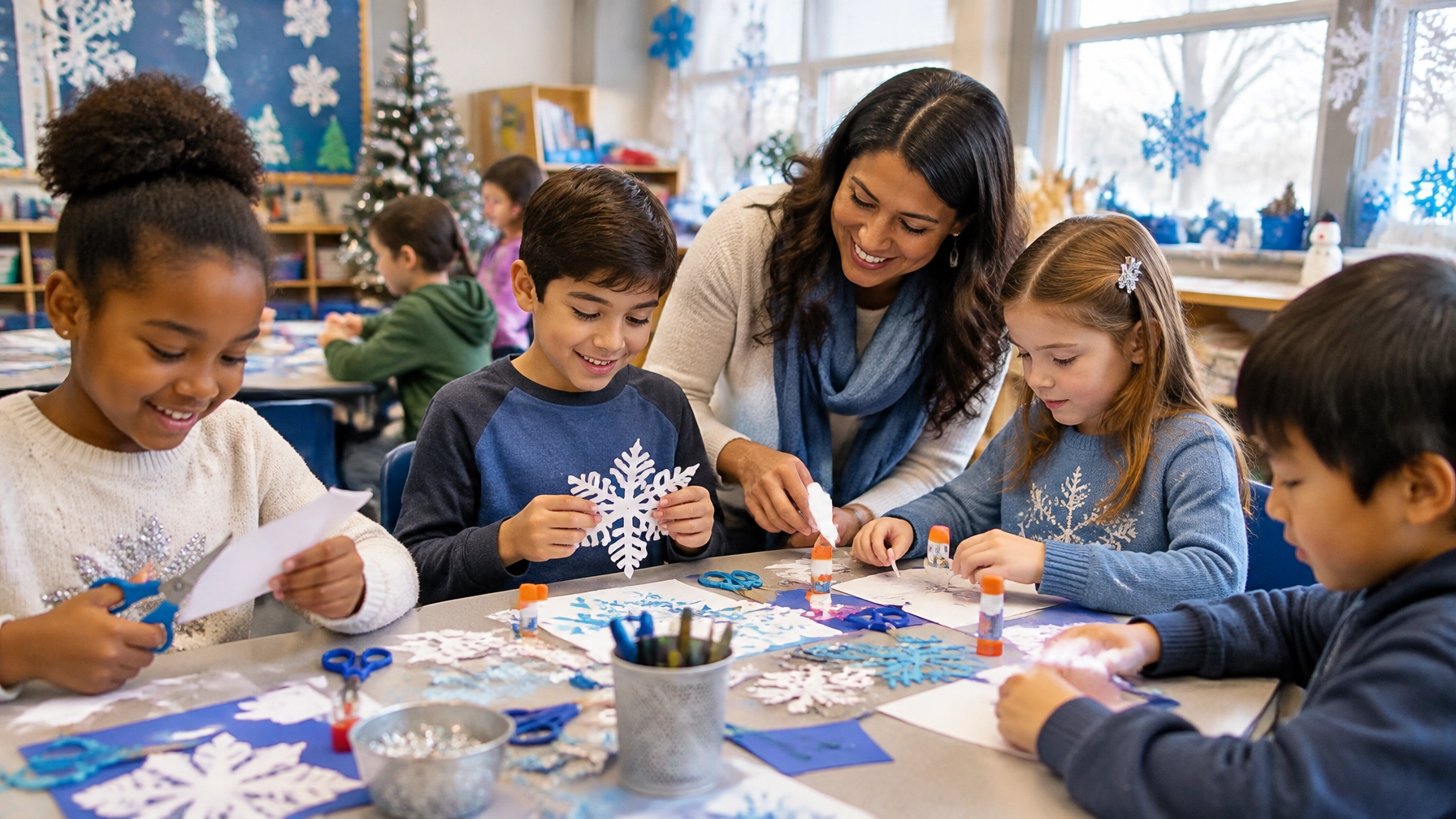
The best classroom party is not the one with the biggest pile of decorations. It’s the one where kids have fun, helpers know what to do, and you don’t spend the whole afternoon wondering who brought the cups.
Try a few of these ideas for your December class party. Pick a holiday theme if it fits your school. Or call it a winter party and keep the activities seasonal and welcoming for everyone.
Stations That Keep Kids Moving
Set up a few activities around the room. Small groups rotate from one to the next, so there’s less waiting and more doing.

-
Winter craft station. Set out pre-cut shapes, glue sticks, crayons, and simple instructions. Kids can make snowflakes, winter scenes, or greeting cards.
-
Cookie decorating. If your school allows food, offer plain cookies and a few toppings. Check with the teacher about allergies, ingredients, and school food rules before buying anything.
-
Hot cocoa bar. Make a cozy cocoa station with cups, cocoa packets, and teacher-approved toppings. Keep it simple. One topping option is still a hot cocoa bar.
-
Winter photo booth. Create a backdrop with snowflakes or paper stars. Add silly props like scarves, mittens, and cardboard snowflakes. Follow school rules before taking or sharing photos.
-
Bookmark-making table. Let students design bookmarks with markers, stickers, and winter pictures. It’s an easy, useful take-home project.
-
Ornament station. Use school-approved, child-safe materials to decorate simple ornaments. If ornaments don’t fit your school’s approach, make paper snowflake decorations instead.
Games With Simple Rules
Choose activities that are quick to explain and easy to reset. For a group of 25, games that keep everyone involved are a better bet than games where most kids sit out.
-
Snowball toss. Use clean cotton balls as “snowballs” and toss them into buckets from a short distance. Make it a team challenge, not a contest to see who has the strongest throwing arm.
-
Holiday or winter bingo. Use pictures of mittens, snowmen, stars, and other seasonal items. You can also use a holiday-themed version if it suits your classroom.
-
Musical chairs with winter songs. Play school-approved seasonal music. To keep everyone included, remove chairs but not players: when the music stops, kids find a partner or a spot in a group.
-
Guess-the-number jar. Fill a clear container with small classroom-safe items, such as pom-poms. Students write down a guess. Keep the jar and its contents away from little hands until the game ends.
-
Winter scavenger hunt. Hide picture clues around the room. Ask teams to find them together, or have everyone search for the same set of items.
Food and Treats, If Your School Allows Them
-
Build-your-own snack mix. Offer only ingredients that the teacher has approved. Check labels and school rules first. If that feels like too much to manage, skip food and choose a non-food activity.
-
Fruit-and-cracker snack cups. Pre-portioned servings can make distribution easier, but they still need teacher approval and allergy checks.
-
Winter-themed fruit shapes. Use fruit cut into snowflake or star shapes if food preparation is permitted. Follow the school’s handling and serving rules.
-
Decorate a paper “treat” bag. Kids can decorate a small bag to take home a sticker, bookmark, or other non-food item. No food required.
Important: Don’t assume a food is safe because it’s labeled “nut-free” or because it looks familiar. Ask the teacher about school food policies and known allergies before planning a food activity. Follow the school’s guidance on ingredients, packaging, handling, and alternatives. FARE’s school food allergy recommendations emphasize keeping students safe while making sure they can fully participate.
Kindness Activities That Feel Good
-
Cards for local nursing home residents. Make cheerful seasonal or winter cards. Check with the teacher or a local organization about delivery and any guidelines.
-
Thank-you notes for school staff. Have students write or draw a note for custodians, office staff, librarians, bus drivers, or other school helpers.
-
Toy or food drive tie-in. If your school is already running a drive, make a small class activity around it. Ask the teacher what items are needed before inviting families to donate.

A Quiet Corner for Kids Who Need a Break
Not every child wants to join every activity. A calm spot gives students a low-key option without making a fuss.
-
Coloring and drawing corner. Put out winter coloring pages, blank paper, and crayons. Keep it away from the loudest game.
-
Story and reset corner. Add a few picture books and simple calming activities, such as quiet drawing or looking through a book. Let kids choose it when they need a pause.

Inclusive Winter Party Ideas
-
Snowflake science. Explore how snowflakes form with a simple, teacher-approved activity or a close look at snowflake pictures. Keep it hands-on and age-appropriate.
-
Hibernation station. Read a short book about animals in winter, then match animals to where they rest or find food.
-
Winter around the world. Set up a few learning stations with books, maps, or classroom-approved resources about winter in different places. Keep the focus curious and respectful. Don’t ask children to explain their family traditions.
-
Winter engineering challenge. Give teams paper, craft sticks, or other approved supplies and ask them to build a sturdy “snow shelter” for a small toy.
-
A season-of-light craft. Make paper lanterns, stars, or other decorations inspired by the winter season. Invite kids to create their own designs without assuming that everyone celebrates the same holiday.
Why Stations Beat One Big Activity
With 25 kids, one activity can turn into a long line and a lot of waiting. Stations give children something to do while helpers guide small groups. They also make it easier to offer different kinds of activities, including a quiet option.
For a 75-minute class party, try this schedule:
- 0–10 minutes: Welcome, explain the plan, and split into groups.
- 10–40 minutes: Rotate through three stations for about 10 minutes each.
- 40–55 minutes: Do one whole-class game, story, or kindness activity.
- 55–65 minutes: Enjoy an approved snack or hand out take-home crafts.
- 65–75 minutes: Clean up together and reset the classroom.
For a 60-minute party, shorten the rotations. For a 90-minute party, add another station or give kids more time at each one. You don’t need to use all 25 ideas. Three good stations beat ten rushed ones.
Ask for Help Without Doing It All Yourself
“Can anyone help?” is a kind question. It’s also hard to answer. List specific jobs instead. An online sign-up sheet can help you organize station leaders, donations, setup, and cleanup in one place.
Set quantity limits on supplies. Ask for two boxes of cups, not “cups if you have them.” Otherwise, you may end up with 40 juice boxes and nothing to pour them into.
Copy-and-Use Sign-Up Categories
- Station leaders: One adult per activity station
- Supply donations: Cups, napkins, craft supplies, or other teacher-approved items, with a quantity listed for each
- Food donations: Only if permitted; include the teacher’s allergy and packaging instructions
- Decorations: A small set of classroom-appropriate decorations
- Setup helpers: Adults to arrange tables and supplies
- Cleanup helpers: Adults to help return the room to normal
- Photographer: Only if allowed by school policy and family permissions
Check With the Teacher First
Before you plan the details, confirm the party time, number of students, food rules, allergy information, and any school policies about treats, decorations, photos, and volunteers. Let the teacher guide decisions about student needs and classroom routines.
A Room-Parent Timeline
- Three weeks out: Confirm the plan with the teacher. Choose a few activities and ask for volunteers.
- One week out: Check sign-ups, fill any gaps, and confirm which supplies are approved.
- Day before: Pack and label station materials. Make a short schedule. Keep backup supplies simple.
- Day of: Arrive early, set up, explain the rotations, and leave room for cleanup.
- After: Thank your helpers and teacher. A quick message is enough.
Make the Class Party Easier to Organize
You bring the ideas. A simple sign-up sheet can help divide the jobs so one room parent isn’t carrying the whole party. TimeToSignUp keeps coordination straightforward, with absolutely no ads and no selling personal information.
Signing up is free, and you can create and use one basic sign-up sheet at a time for free. For unlimited sign-up sheets and advanced features, pricing is $19 per year for nonprofit and personal accounts and $25 per year for commercial accounts. See the TimeToSignUp features and pricing.
The goal isn’t a perfect party. It’s a fun, welcoming class party that you and the kids can enjoy, without 12 people bringing the same snack.